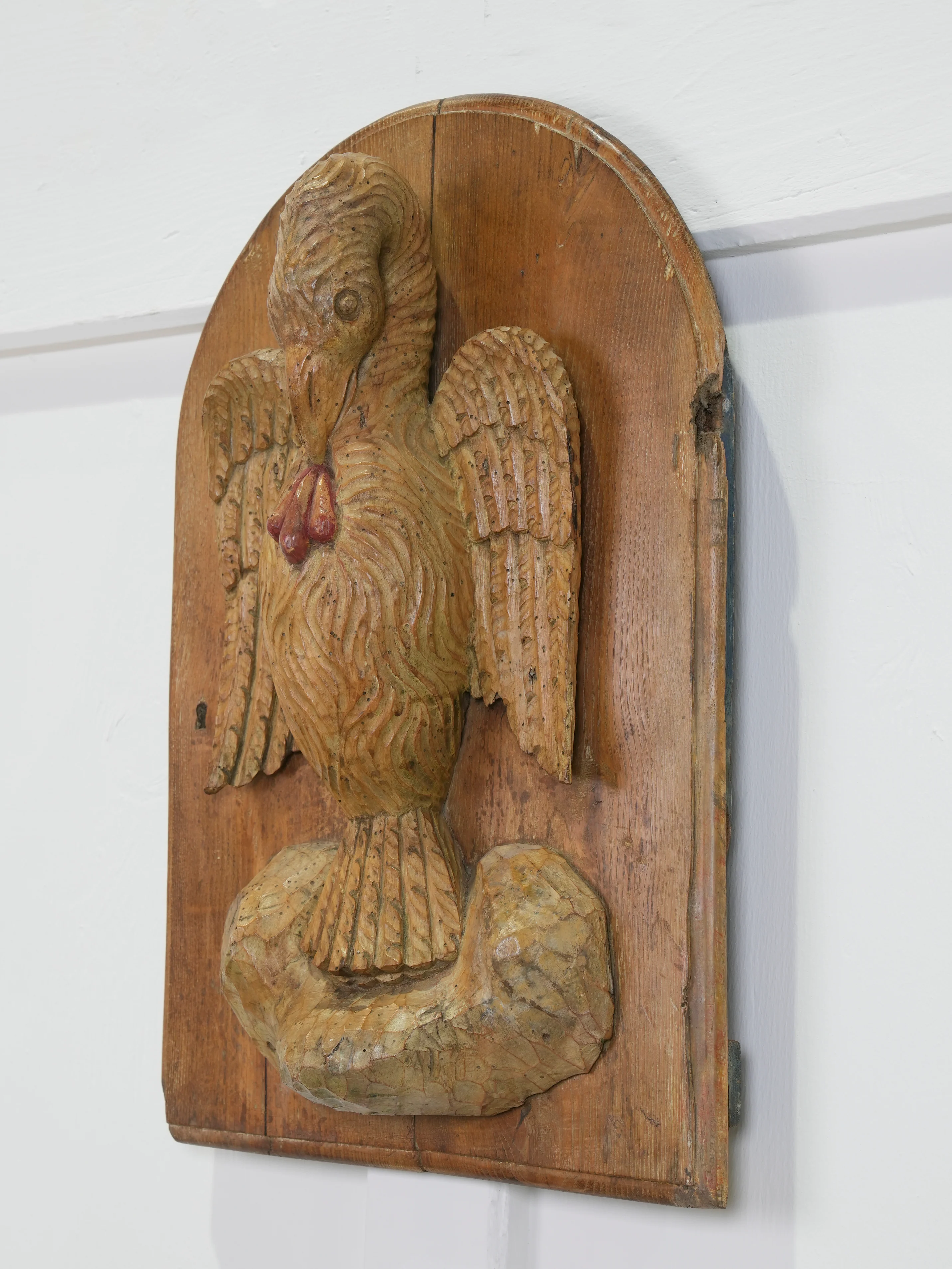
An 18th Century Carved Pelican
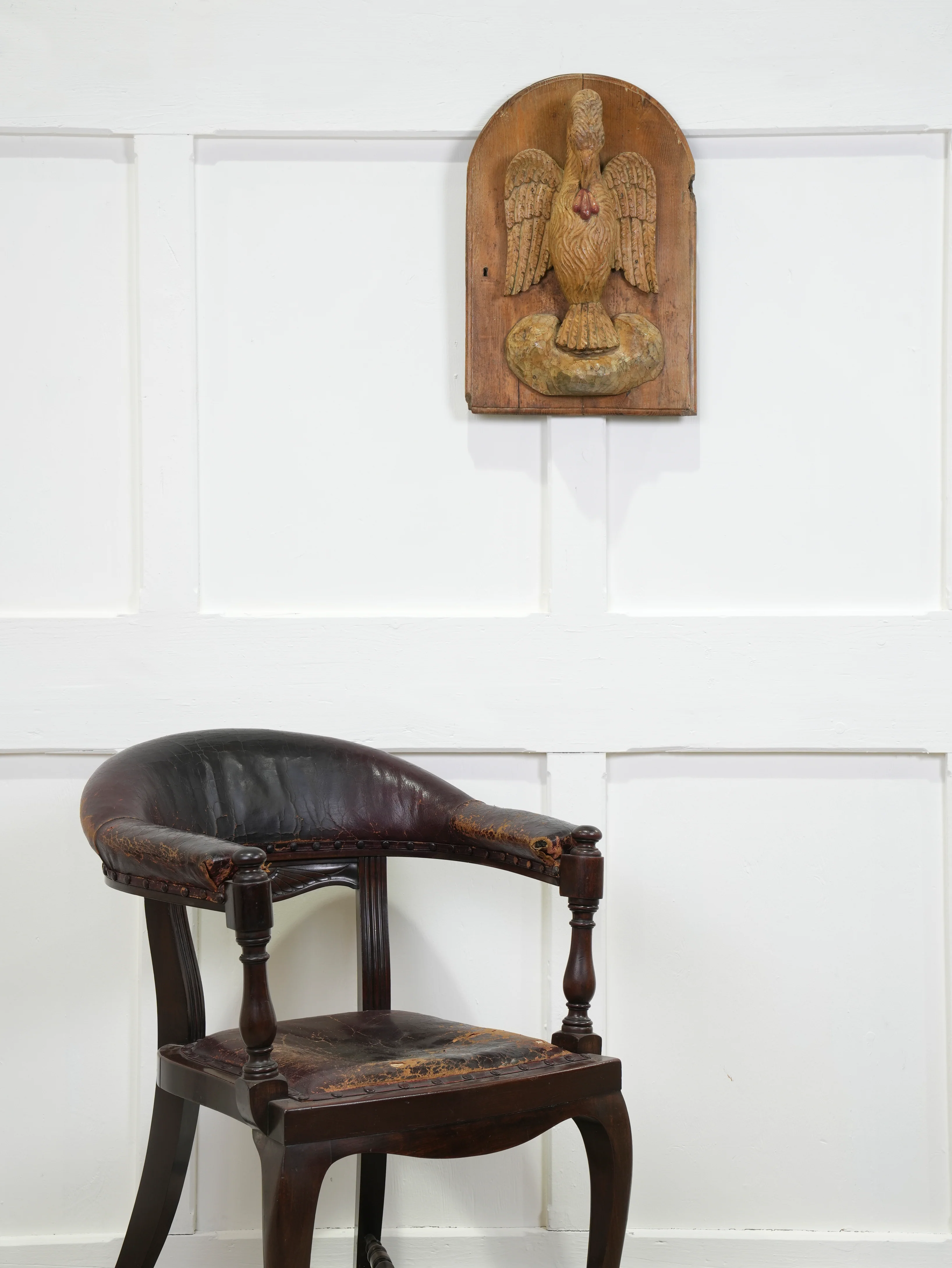
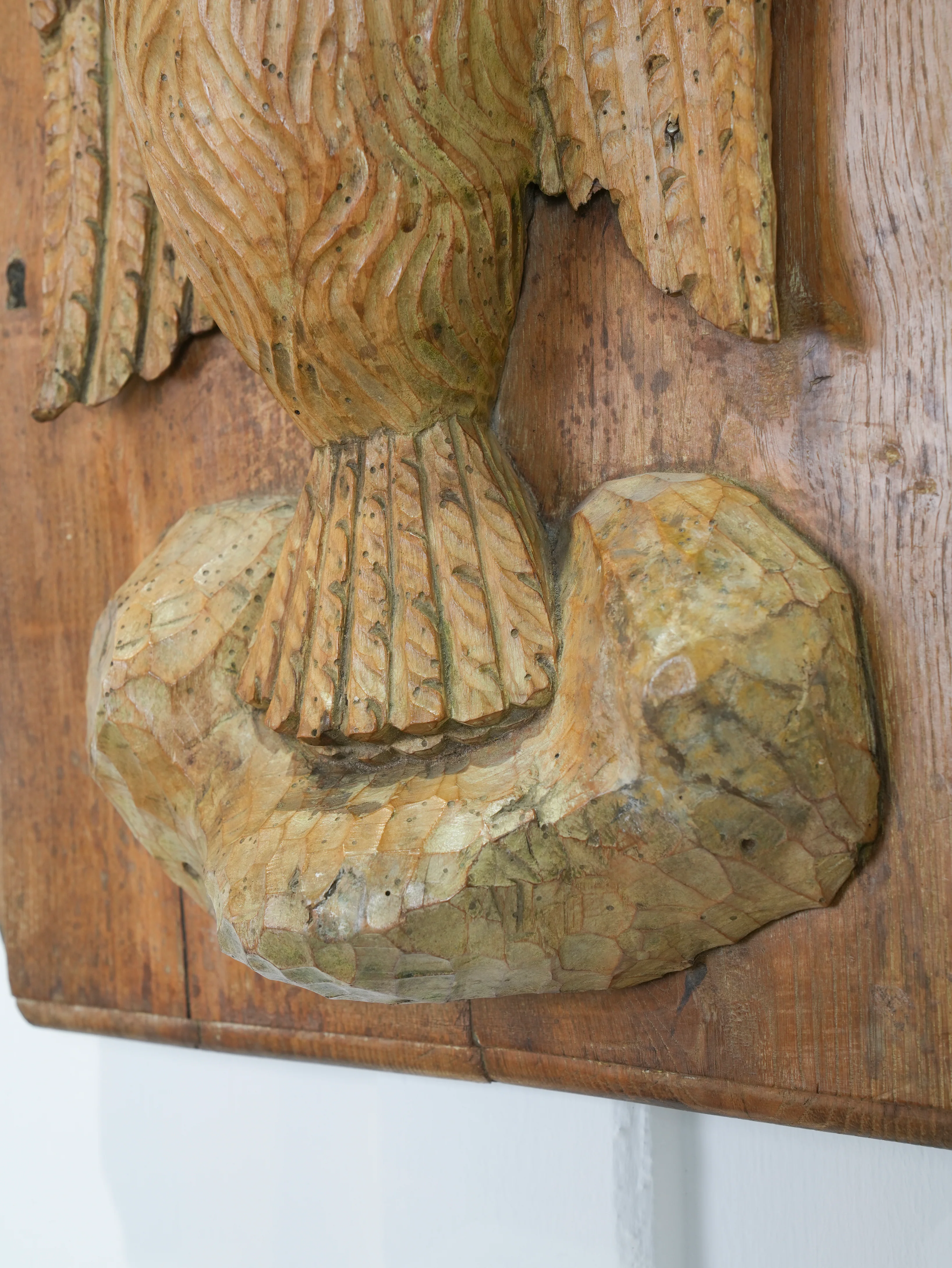
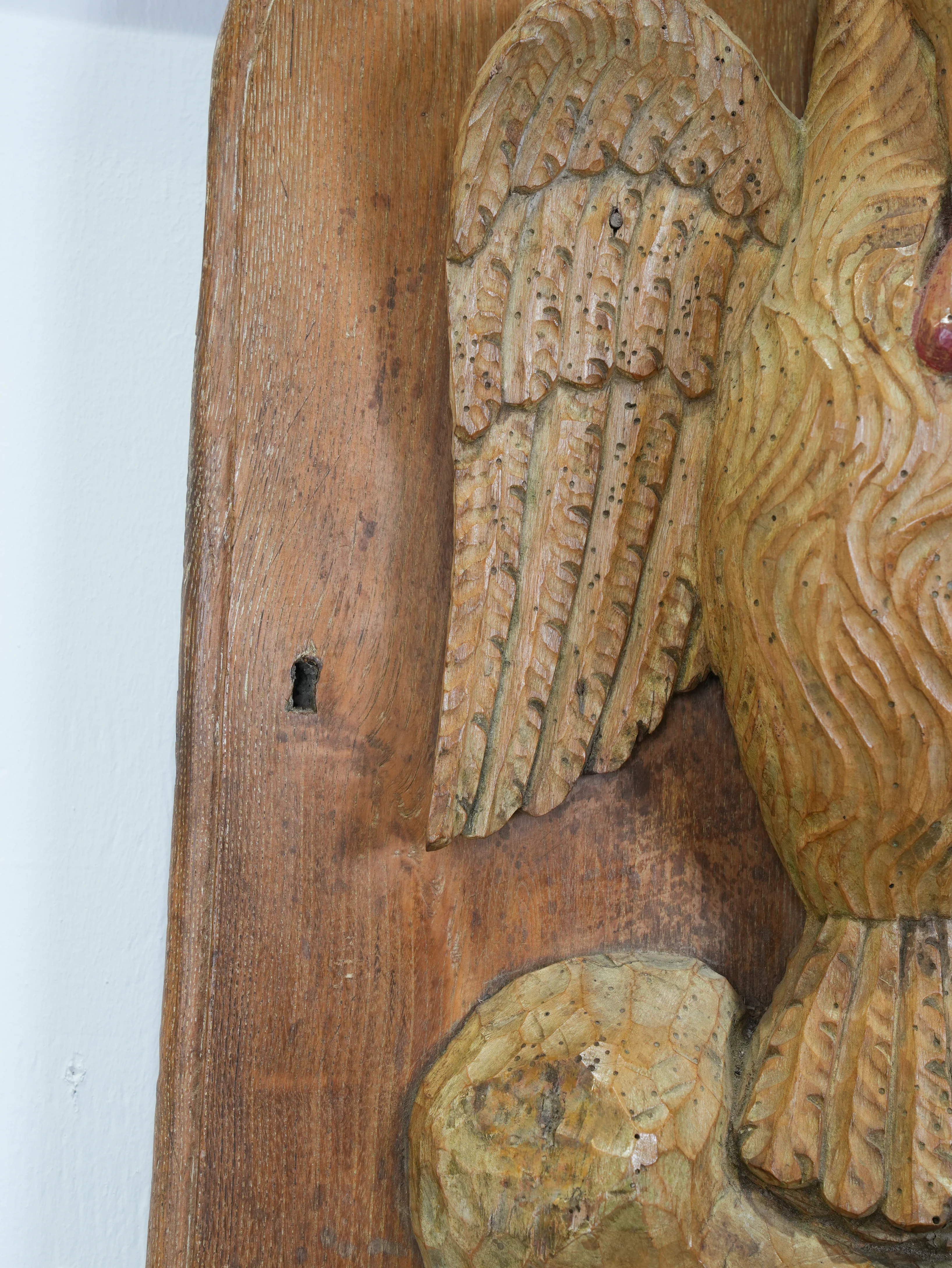
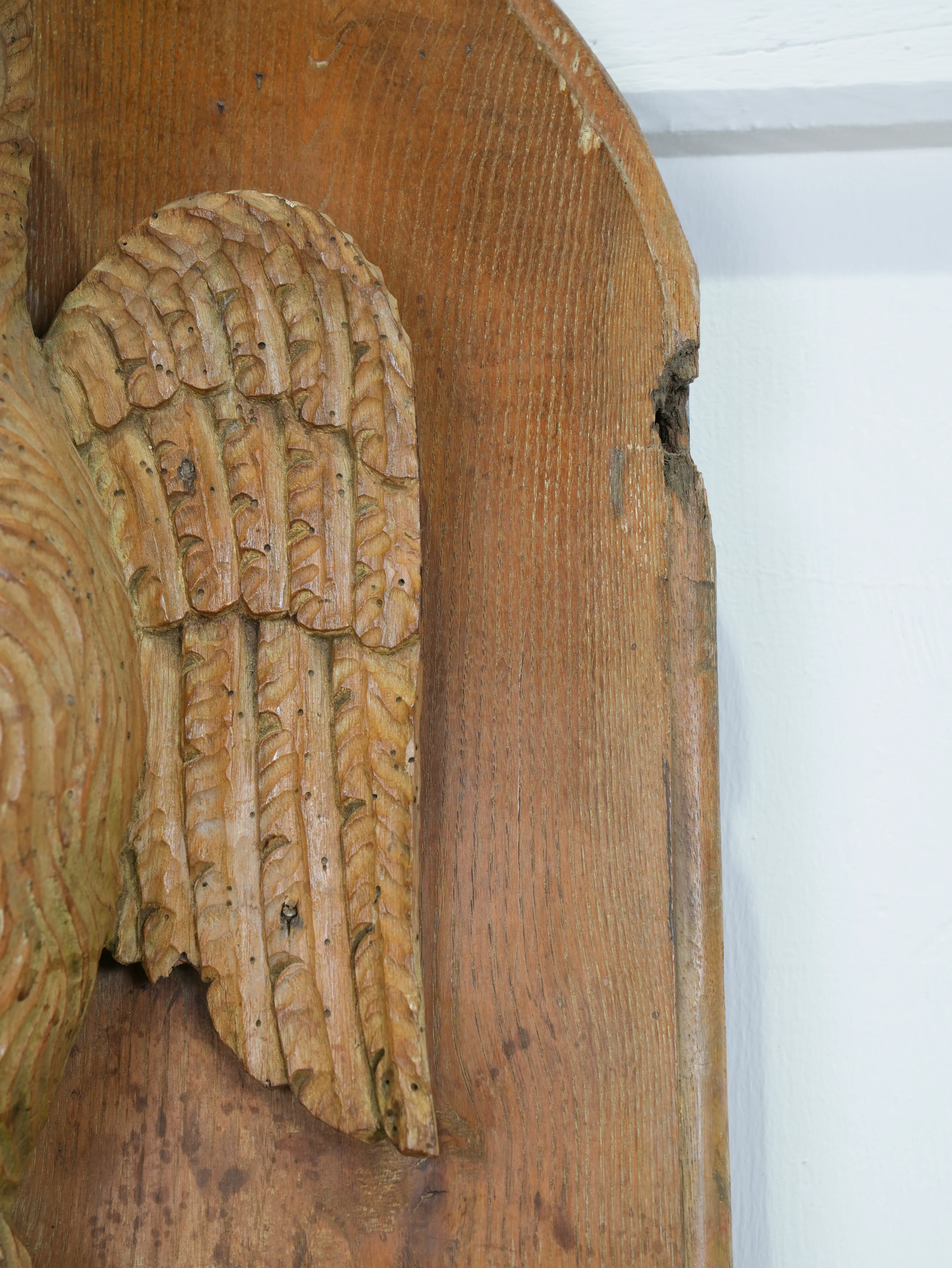
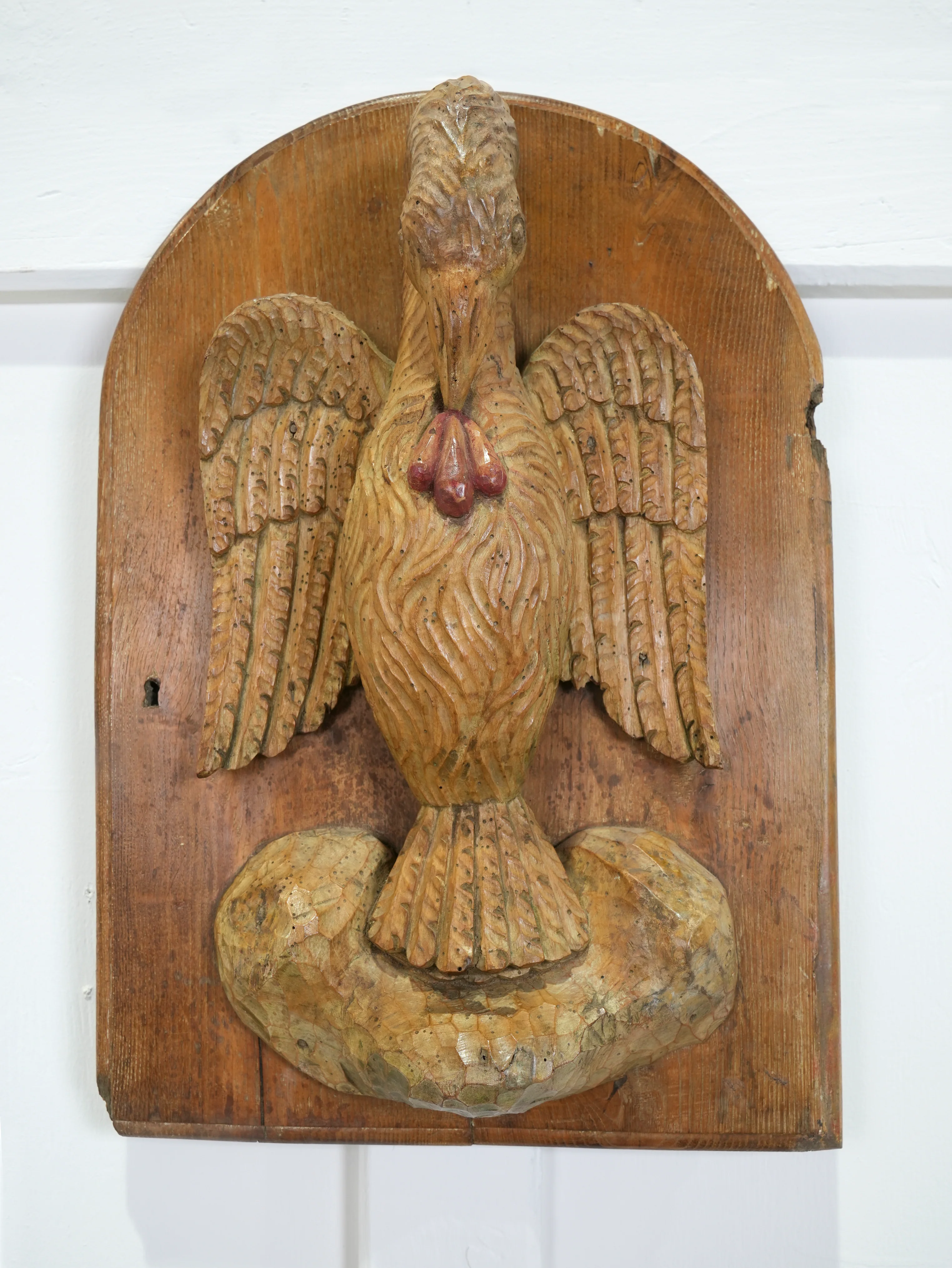
The carved fruitwood Pelican mounted on a simple arched cupboard door with block painted stars on a blue ground to the interior.
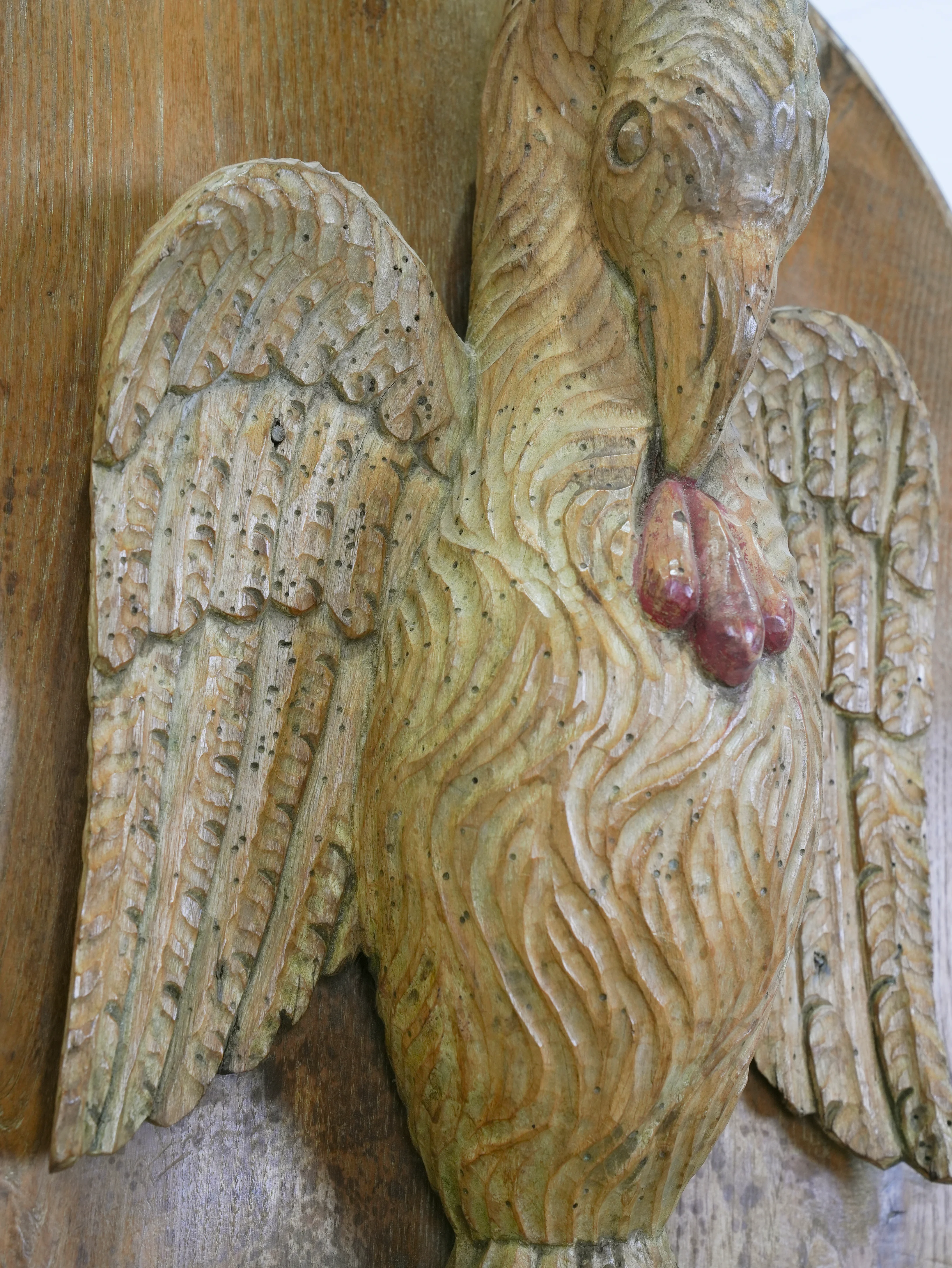
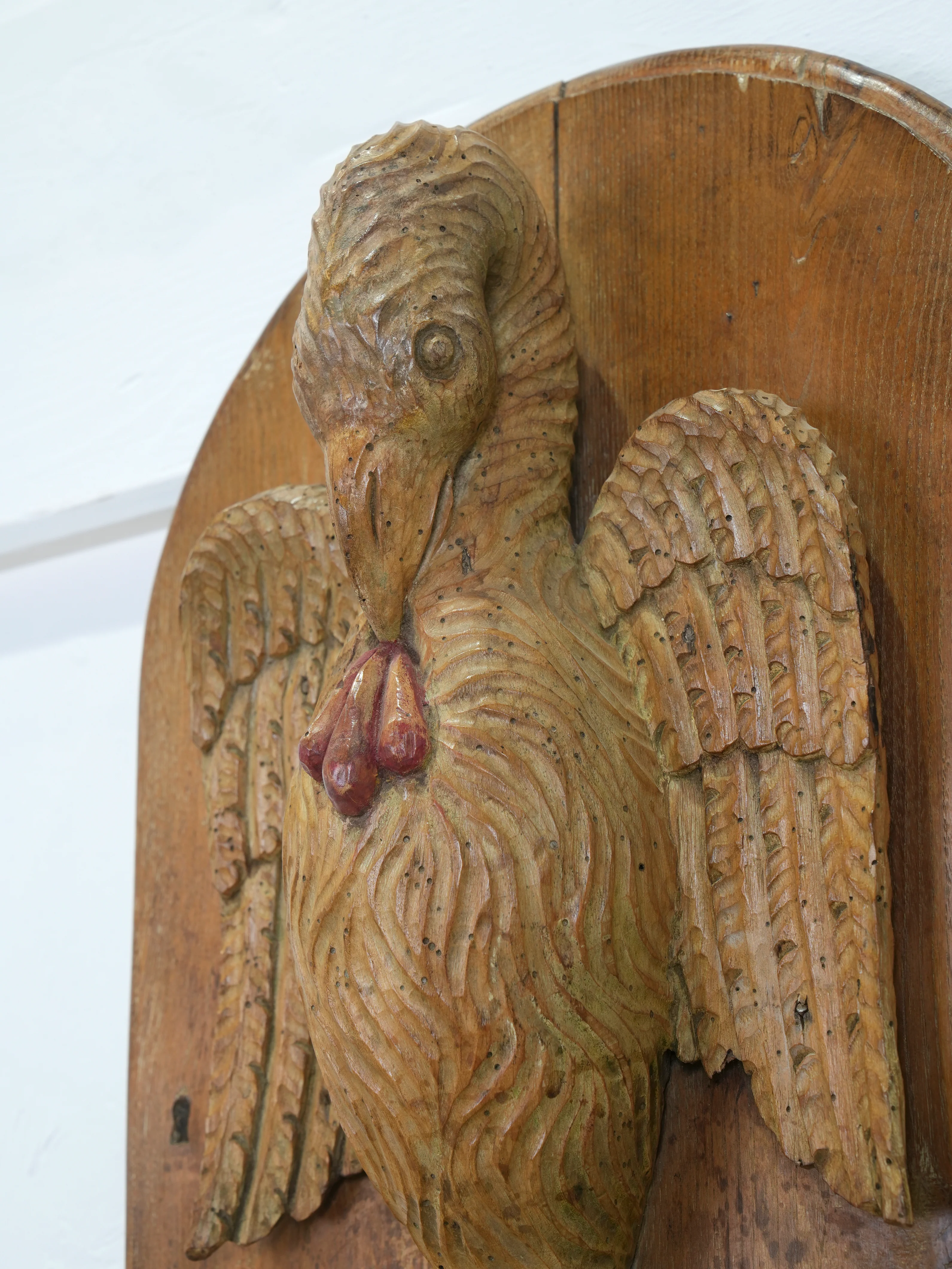
An exceptionally well carved and preserved example with remnants of the original painted surface.
H:49 W:33 D:15 CM
H:26 W:12.9 D:5 INCHES.
The imagery of the mother pelican striking or vulning (from the Latin vulnerare, "to wound") her breast to feed her nestlings to prevent starvation in time of famine is rooted in an ancient legend that antedates Christianity. It was believed that she feeds her dying chicks with her own blood to revive them from death, but, in turn, lost her own life
More Images
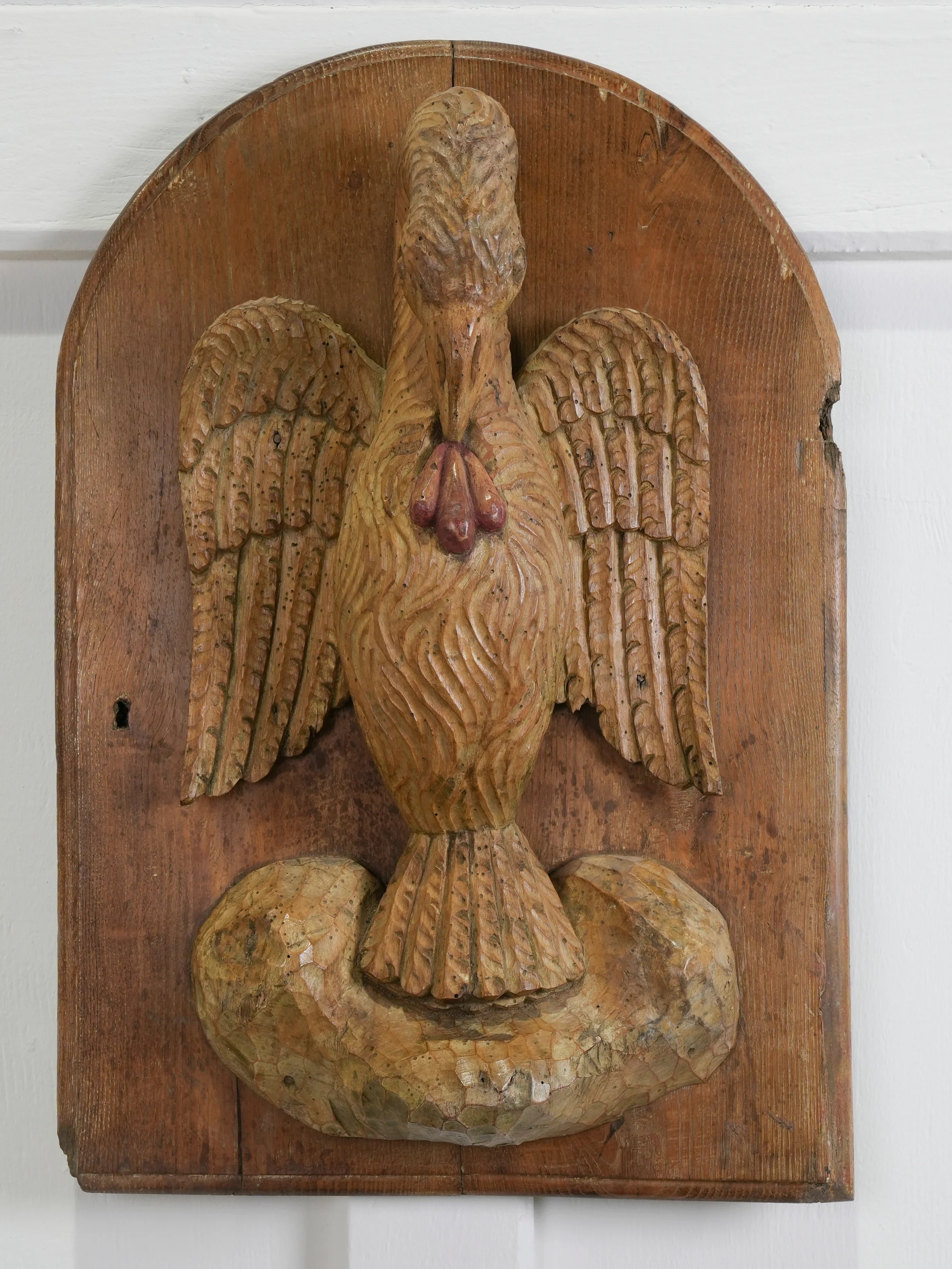
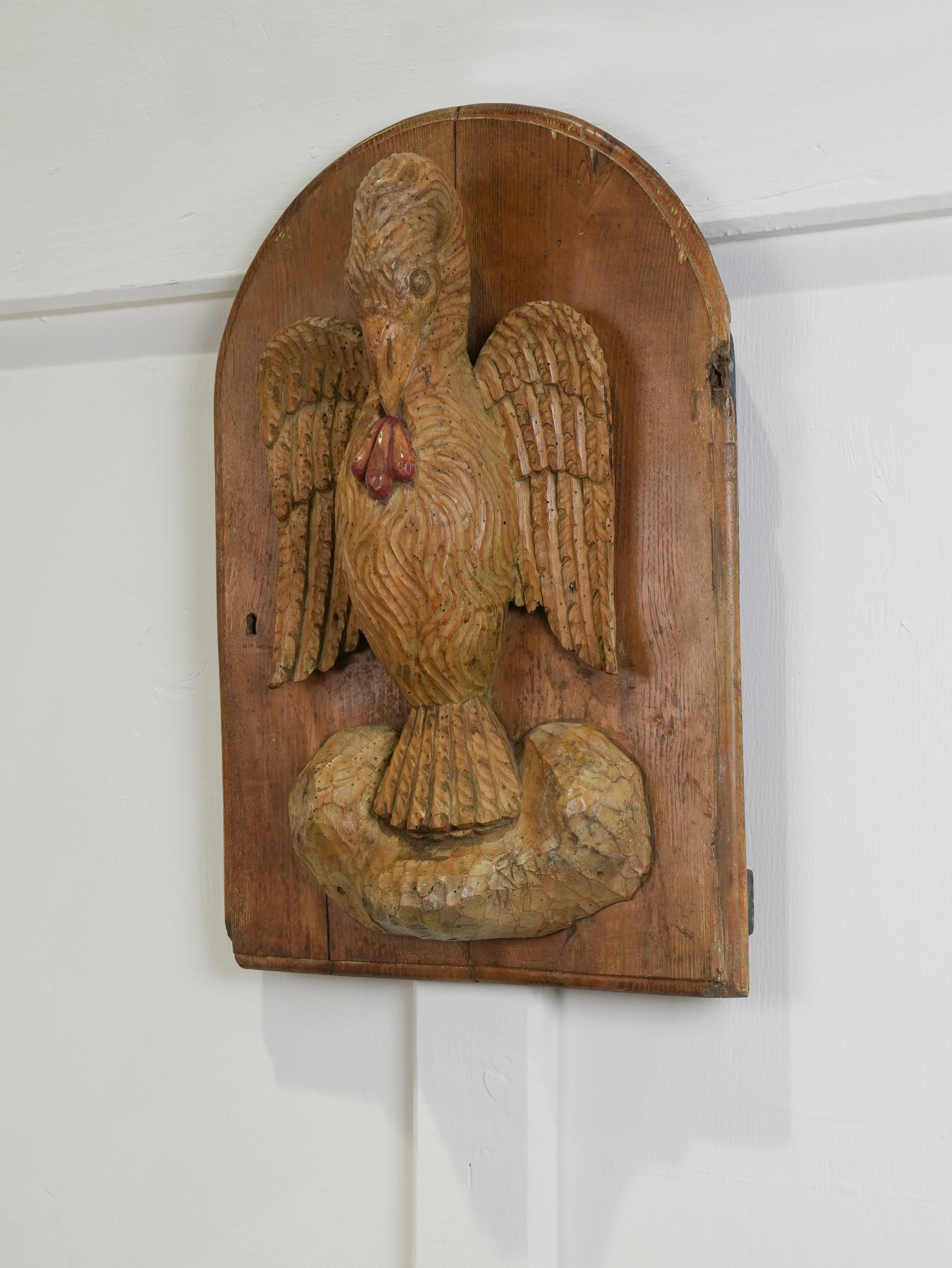
An 18th Century Carved Pelican
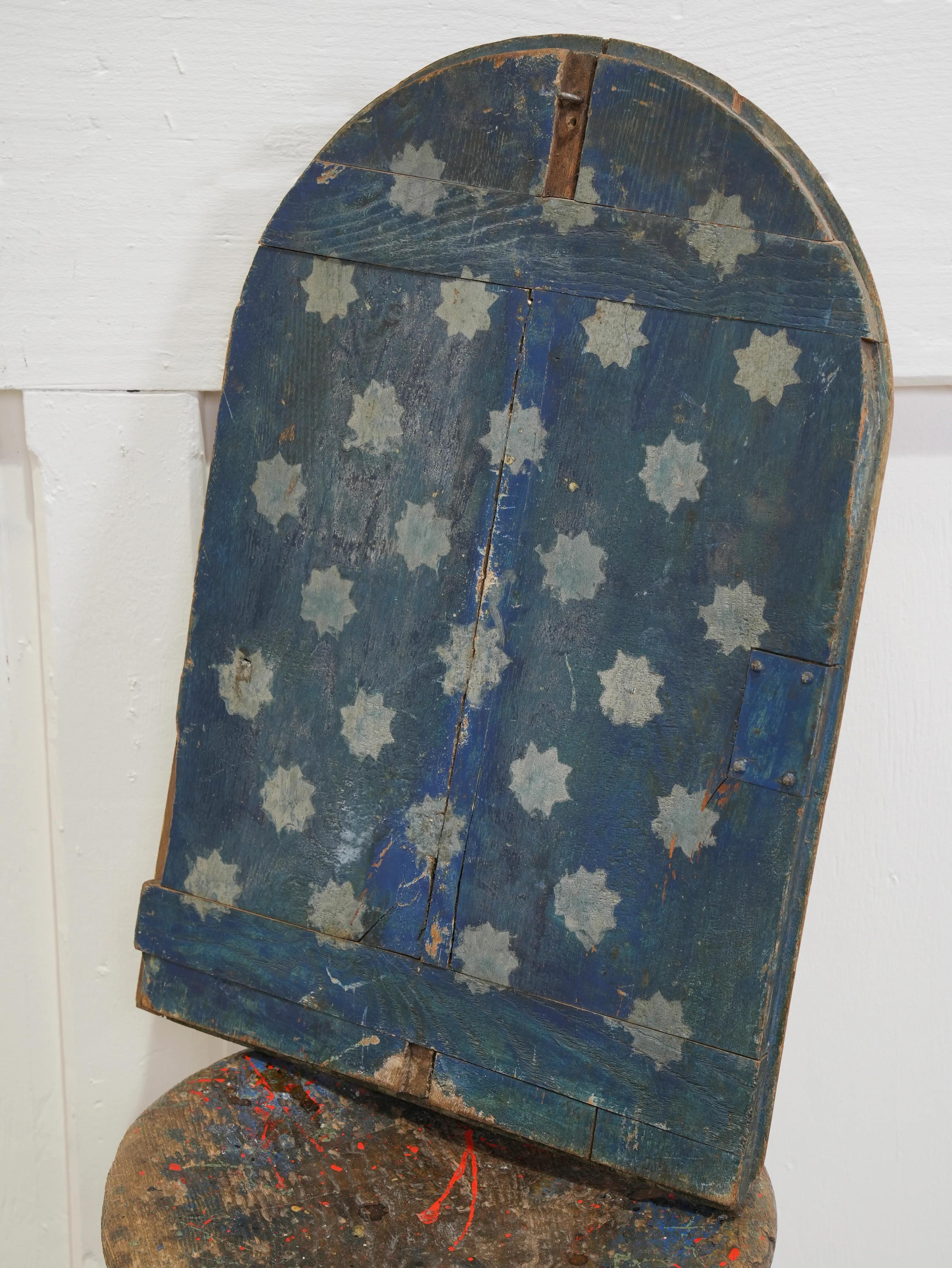
The carved fruitwood Pelican mounted on a simple arched cupboard door with block painted stars on a blue ground to the interior.
An exceptionally well carved and preserved example with remnants of the original painted surface.
H:49 W:33 D:15 CM
H:26 W:12.9 D:5 INCHES.
The imagery of the mother pelican striking or vulning (from the Latin vulnerare, "to wound") her breast to feed her nestlings to prevent starvation in time of famine is rooted in an ancient legend that antedates Christianity. It was believed that she feeds her dying chicks with her own blood to revive them from death, but, in turn, lost her own life
Product Information
Product Information
Shipping & Returns
Shipping & Returns
Description
The carved fruitwood Pelican mounted on a simple arched cupboard door with block painted stars on a blue ground to the interior.
An exceptionally well carved and preserved example with remnants of the original painted surface.
H:49 W:33 D:15 CM
H:26 W:12.9 D:5 INCHES.
The imagery of the mother pelican striking or vulning (from the Latin vulnerare, "to wound") her breast to feed her nestlings to prevent starvation in time of famine is rooted in an ancient legend that antedates Christianity. It was believed that she feeds her dying chicks with her own blood to revive them from death, but, in turn, lost her own life